

Valentine’s season is usually about romance, but for product and data leaders across Asia, February often comes with a different kind of question:
“Do we still trust our customer insights?”
If your team has ever stared at a research deck and felt a quiet hesitation—sample feels off… the trend might already be outdated… the data doesn’t match what we’re seeing in-market—you’re not alone. Across Asia, market research is undergoing a reset. The demand for insight is exploding, but so are the forces that make insight harder to trust: platform shifts, consumer fragmentation, survey fraud, privacy requirements, and faster decision cycles.
This Valentine’s Day 2026, the teams that “fall back in love” with market research won’t do it by producing more reports. They’ll do it by building an insight engine: faster, more defensible, and directly connected to product decisions.
Below are the latest Asia-relevant trends shaping market research in 2026, plus what they mean for how you plan, execute, and operationalize insights.
1) Asia’s consumers are cautious, value-driven, and tech-shaped
Many APAC consumers are still careful with spending, and value remains a dominant decision driver going into 2026. NielsenIQ’s APAC outlook on how trust, value, and technology are redefining growth into 2026 emphasizes how trust, value, and technology are reshaping shopping behavior.
What this means for research:
- You can’t treat “price sensitivity” as a one-time insight; it behaves differently across markets, categories, and cohorts.
- “Trust” is now both a brand attribute and a research constraint. Consumers are cautious, and skepticism toward claims (and sometimes surveys) is rising.
- Product teams need near-real-time insight on what “value” means today: promotions, bundles, durability, convenience, financing, delivery speed, and returns policies.
Valentine’s angle: Your customers are still open to commitment—but they’re choosing carefully. Your insights need to explain why, not just what.
2) Asia isn’t one market, and the “average consumer” model is breaking
A major shift heading into 2026 is the growing impossibility of “one APAC strategy.” In practice, research teams are confronting fragmentation in at least four dimensions:
Platform fragmentation
Consumer discovery and purchase behavior vary widely depending on the ecosystem: marketplaces, super-apps, messaging commerce, short video, and live selling.
Geographic fragmentation
Within a single country, urban vs. tier-2/3 (and even neighborhood-level behavior in megacities) can look like different markets.
Cohort fragmentation
Gen Z and Millennials don’t just have different preferences; they use different channels, trust different sources, and respond differently to incentives.
Behavioral fragmentation
Two people with identical demographics can behave very differently based on life stage, social influence, content habits, and payment preferences.
What this means for research:
- Segmentation must be more dynamic: less “persona poster,” more “living taxonomy.”
- Teams need the ability to cut insights by platform, cohort, region, and behavior quickly—without re-running the entire study.
Valentine’s angle: “It’s complicated” isn’t a relationship status—unless your segmentation makes it one.
3) Social commerce is not a side channel in SEA—it’s shaping demand signals
If you do market research in Southeast Asia without treating social commerce as a core context, you’ll increasingly miss the story.
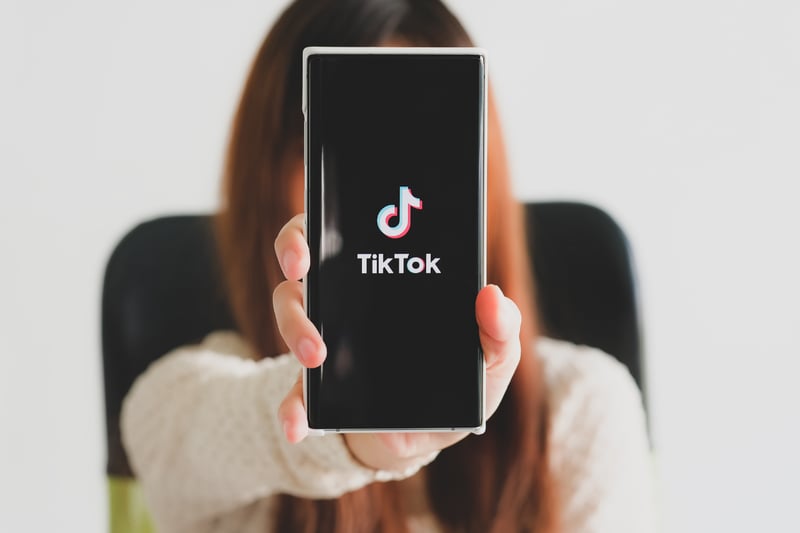
Momentum Works reporting on SEA platform e-commerce GMV reaching $128.4B in 2024 and platform share shifts is a loud signal: the region’s commerce reality is platform-led—and increasingly creator-influenced.
Meanwhile, Wired’s analysis of TikTok Shop’s rapid scaling and strong adoption in Southeast Asia highlights how entertainment-led shopping and creator-driven selling are shaping demand cycles in SEA.
What this means for research:
- Traditional surveys alone can lag behind platform-driven trend cycles.
- You need fast insight loops to understand how creators, promotions, and algorithmic distribution are moving demand.
The best research questions are now closer to:
- “What content formats trigger intent?”
- “Which creator archetypes build trust for this category?”
- “What friction kills conversion in live shopping?”
Valentine’s angle: In SEA, discovery often looks like entertainment. If your research doesn’t capture that, you’re asking customers to describe a relationship they experience emotionally and socially—using purely rational questions.
4) Data quality and fraud are becoming existential, not annoying
One of the biggest “relationship problems” in modern insights is blunt: teams don’t believe the data.
Greenbook’s overview of tech-enabled fraud blending into survey research and why it’s hard to detect captures why “basic quality gates” are no longer sufficient.
A peer-reviewed perspective also shows how AI-enabled fraud can materially reduce usable responses and why multi-layer defenses matter: Frontiers paper on AI-powered fraud, its impact, and detection strategies.
And if you want a single headline that makes the risk feel real: a Dartmouth/PNAS summary PDF showing AI passing 99.8% of attention checks.
What this means for research operations:
- Quality cannot be an afterthought. It must be designed into sampling, instrument design, verification, and post-collection validation.
- You’ll need multi-layer defenses: identity signals, behavior signals, anomaly detection, and consistency checks.
- “Speed” without verification is now a tax: you may pay later via re-fielding, reanalysis, and leadership skepticism.
Valentine’s angle: Trust isn’t rebuilt with prettier charts. It’s rebuilt with proof.
5) AI is changing market research—but it’s also raising the bar for validation
2026 is not simply “AI in research.” It’s AI plus scrutiny.
Industry predictions increasingly converge on themes like automation, faster insight cycles, and new operating models—while acknowledging that differentiators will be trust, integration, and execution quality. Greenbook’s APAC-focused 2026 market research predictions reflect this shift.
Meanwhile, governance frameworks are becoming part of the operating model. Ipsos’ response to ESOMAR’s “20 Questions” for AI transparency is one example of how major firms are formalizing the assessment and disclosure of AI.
What this means for product & data leaders:
- Treat AI outputs as hypotheses until validated.
- Invest in traceability (how did we get this conclusion?) and reproducibility (would we see it again?).
- Build workflows where AI speeds up processing, but humans and systems enforce confidence.
Valentine’s angle: AI can write love letters. It can’t guarantee they’re true.

6) Regulation and privacy expectations are rising—especially in India
Privacy isn’t just compliance; it changes how you can recruit, contact, store, and process respondent data.
India’s DPDP framework continues to evolve through rules and implementation guidance, with 2025 rules shaping practical obligations. Two useful reference points are the Government of India summary of DPDP Rules 2025 and phased compliance timeline, and the official Gazette/MeitY DPDP Rules 2025 PDF.
What this means for research in Asia:
- Consent flows, retention policies, and data minimization become design constraints.
- Vendor selection increasingly includes privacy posture and operational controls.
- “Just collect everything and analyze later” is steadily becoming a liability.
Valentine’s angle: If you want trust from consumers, you have to earn it—with transparency and restraint.
7) The biggest bottleneck is no longer insight generation—it’s insight adoption
Many teams aren’t failing to produce insights. They’re failing to get the organization to believe and act.
This shows up as:
- Stakeholders are debating sample validity instead of making decisions.
- Teams re-running studies “to be safe”.
- Insights landing as static decks with no owner, no next step, no follow-through.
To become action-driving, every research effort should declare up front:
- Decision it informs (What decision will change?)
- Timing window (When must we decide?)
- Confidence threshold (What would be “enough” evidence?)
- Validation path (How will we cross-check with other signals?)
- Owner (Who commits to a next action?)
Valentine’s angle: The point isn’t to get a “yes” from the data. The point is to know what you’ll do if the data says “yes.”
The 2026 Playbook: How to Build a Healthier “Relationship” With Market Research in Asia
If you want research your org can trust and use, build around these operating principles:
- Shift from “projects” to “always-on insight”.
- Design for fragmentation.
- Treat quality as a product requirement.
- Make research testable.
- Build privacy into the process (not bolted on later).
A Valentine’s 2026 Closing Thought
A lot of teams are quietly “breaking up” with market research because it feels too slow, too uncertain, or too disconnected from what’s happening on the ground.
But the right move isn’t to abandon research. It’s to rebuild it around what Asia demands in 2026:
- Speed that matches market reality
- Trust that survives stakeholder scrutiny
- Integration that turns insight into action
That’s how you fall back in love with insight—by making it reliable enough to commit to.
Learn more in Valentine’s Day in Asia 2026: Trends, Data-Driven Consumer Insights, Gifts to Buy, & Where to Go and Fall in Love Again at Asia's Top Destinations This Valentine's Day, all on Eye on Asia. Stay tuned for our next feature! ✨
 Download Panel Book



