
Why International Survey Data Collection Gets Delayed
International fieldwork slips for predictable reasons — translation, recruitment, time zones, and quality gaps. Learn what causes the delays and how better vendor evaluation keeps cross-border studies on schedule.
Talk to an expertQuick answer
- Language translation and cultural adaptation add unexpected time to survey fieldwork when not planned from the start.
- Recruitment across multiple Asian markets requires local expertise and pre-verified panel access to meet quotas on schedule.
- Time zone coordination and communication gaps between global teams create bottlenecks that compound across project phases.
- Evaluating vendors on operational depth, quality control processes, and regional experience improves timeline predictability for cross-border studies.
- dataSpring's 24/7 operations hub and proprietary Asian panels help research teams reduce fieldwork delays through direct panel access.
What Causes Delays in International Survey Data Collection?
International survey data collection often gets delayed because of translation issues, cultural adaptation, respondent recruitment challenges, time zone gaps, quality control problems, and vendor coordination delays.
For Japanese market research teams managing cross-border studies, these delays are more than scheduling issues. A delayed survey can mean missed product launch windows, outdated research inputs, and budget overruns that affect downstream decisions.
The causes are often predictable. Multi-country fieldwork requires careful planning across language, culture, sample recruitment, quality checks, communication, and operations. When these are not aligned early, small delays can build up across each project phase.
1. How Do Language and Translation Issues Slow Down Survey Fieldwork?
Translation is rarely a simple word-for-word exercise. Japanese, for example, has multiple terms for concepts that English expresses in a single word. According to Quirks, the language is highly subjective and context-dependent, meaning the same English phrase might require different Japanese translations depending on the target audience.
This complexity extends beyond translation into cultural adaptation. Survey questions that work in Western markets may feel too direct or intrusive to Japanese respondents. Research from Kantar notes that agreeability patterns differ dramatically across countries — in Japan, only 11% of survey responses fall on the positive end of rating scales, compared to 75% in India.
When cultural adaptation is treated as an afterthought, delays multiply during in-country review stages. The solution involves building glossaries upfront, working with linguists who understand market research terminology, and allowing adequate time for back-translation and validation.
2. Why Does Respondent Recruitment Create Timeline Bottlenecks?
Finding qualified respondents across multiple Asian markets introduces complexity that single-country studies do not face. Each market has different attitudes toward survey participation, preferred engagement methods, and varying levels of digital access.
In Japan, telephone research can be harder to execute because some consumers are uncomfortable sharing personal information or answering calls from unknown numbers. Online research naturally works better, but panel quality varies significantly between vendors. Some panels rely on aggregated third-party sources, while proprietary panels offer more reliable targeting and verification.
dataSpring provides access to millions of panelists across 12 Asian markets, supported by proprietary panel recruitment and verification practices. This direct panel access eliminates intermediary delays and gives research teams more control over recruitment timelines. When quotas prove difficult to fill, having an operations partner with established local panels makes the difference between project delays and on-time delivery.
3. How Do Time Zone Differences Affect Cross-Border Survey Projects?
A project lead in Tokyo may be ending their day while a client or research partner in New York has not yet started theirs. When decisions require sign-off across distant time zones, simple questions can take 24 to 48 hours to resolve. These small delays compound across project phases.
According to ESR Research, successful multi-country projects establish clear expectations for when fieldworkers and team leaders will be reachable. Some teams adopt a "follow the sun" workflow, planning activities so that work moves across compatible time zones and tasks are handled during normal local working hours.
For Japanese research buyers managing studies across Asia, Europe, or North America, working with a vendor that operates 24/7 data collection reduces dependency on synchronized schedules. dataSpring's operations hub in Manila supports continuous fieldwork execution, helping data collection proceed even outside Japan's business hours.
4. What Role Does Vendor Evaluation Play in Preventing Delays?
Many timeline problems trace back to choosing vendors based on price or geographic reach alone. Operational depth matters more than the number of countries a vendor claims to cover. Ask specifically how they manage sample consistency across markets and what happens when quality flags appear mid-field.
Research from The Logit Group suggests evaluating vendors on four dimensions: operational infrastructure, flexibility to enter at any project stage, accountability when problems arise, and experience with studies matching your complexity. The answers to these questions reveal more about operational maturity than any proposal document.
Strong vendor relationships take years to develop. Partnering with a research operations provider that has established local networks and in-country expertise reduces the learning curve that causes delays in early projects.
5. How Can Data Quality Issues Lead to Fieldwork Extensions?
When data quality problems surface late in fieldwork, projects stall while teams decide how to address invalid responses. Duplicate submissions, straight-lining, and respondents who do not match screening criteria all require additional time to clean or replace.
dataSpring's quality check systems address these issues through panel verification and profiling at the recruitment stage. By validating respondents before they enter surveys, research teams spend less time on data cleaning and more time on analysis. This preventive approach reduces the need for fieldwork extensions caused by quality remediation.
What Should You Ask Vendors About Quality Control?
Request specifics about how quality monitoring works during fieldwork, not just at data delivery. Ask what triggers a quality flag, how quickly issues are escalated, and what remediation options exist without resetting timelines. Vendors who build quality control into their workflow rather than adding it afterward tend to deliver more consistent results.
Why Do Japanese Market Research Teams Face Unique Challenges in International Studies?

Japanese research buyers often coordinate studies across markets where cultural and operational practices differ significantly from their domestic experience. What works for Japanese consumers may not translate to Indonesian or Thai markets, and assumptions about respondent behavior can lead to missed quotas.
Additionally, Japanese business culture places high value on thorough planning and consensus-based decision-making. When international partners operate with different expectations about turnaround times or approval processes, friction emerges. Building these cultural differences into project plans from the start helps avoid mid-project recalibrations.
Working with a vendor that understands both Japanese business practices and local Asian markets bridges this gap. dataSpring, as part of the INTAGE Group — Japan's leading marketing research company — combines Japanese operational standards with on-the-ground expertise across APAC markets.
What Operational Practices Improve Timeline Predictability?

Research teams that consistently hit deadlines share several practices. They build cultural adaptation time into project schedules from the start. They work with vendors who have direct panel access rather than relying on sample aggregators. They establish clear communication protocols across time zones.
They also conduct vendor evaluations that go beyond capability claims to examine operational track records. Ask potential partners for examples from studies similar in scope and market complexity to yours. Request references from clients who have run multi-wave trackers or tight-timeline projects.
Building Buffers for Unpredictable Variables
Even well-planned projects encounter unexpected obstacles. Regulatory changes, holiday periods, or regional events can disrupt recruitment in specific markets. Building a 10-15% buffer time into fieldwork schedules accounts for these variables without derailing overall project timelines.
In Conclusion: How to Reduce International Survey Delays Through Better Vendor Selection
International survey data collection delays stem from predictable causes: translation complexity, recruitment challenges, time zone coordination, and quality control gaps. For Japanese market research teams, addressing these factors requires working with partners who understand both the operational demands of multi-country fieldwork and the specific dynamics of Asian markets.
The opportunity is not simply to track where delays occur, but to understand why they happen and select vendors accordingly. Research teams that prioritize operational depth, local panel access, and 24/7 support capabilities position themselves to deliver projects on schedule. dataSpring's combination of proprietary Asian panels, continuous operations support, and regional expertise offers Japanese research buyers a path to more predictable international study timelines.
Ready to reduce delays in international survey data collection?
Work with dataSpring to support cross-border fieldwork, reach verified Asian respondents, and manage survey operations across multiple Asian markets.
Contact dataSpringFAQs About Why International Survey Data Collection Gets Delayed
What is the most common cause of delays in international survey projects?
How can Japanese research teams reduce time zone coordination issues?
Why is direct panel access important for meeting survey deadlines?
What questions should you ask vendors about their quality control processes?
How does vendor selection affect international survey timelines?
Related resources

dataSpring's industry-leading Quality Check System ensures data validity and valuable insights.
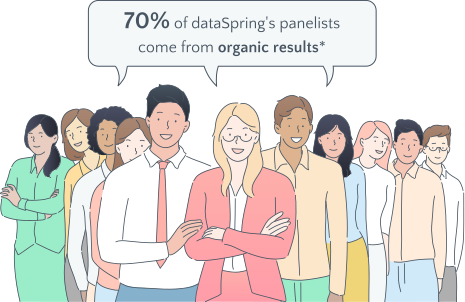
Find out the sources that dataSpring uses to build its proprietary Asian panel.

Local market research trends across the region.

 Download Panel Book



